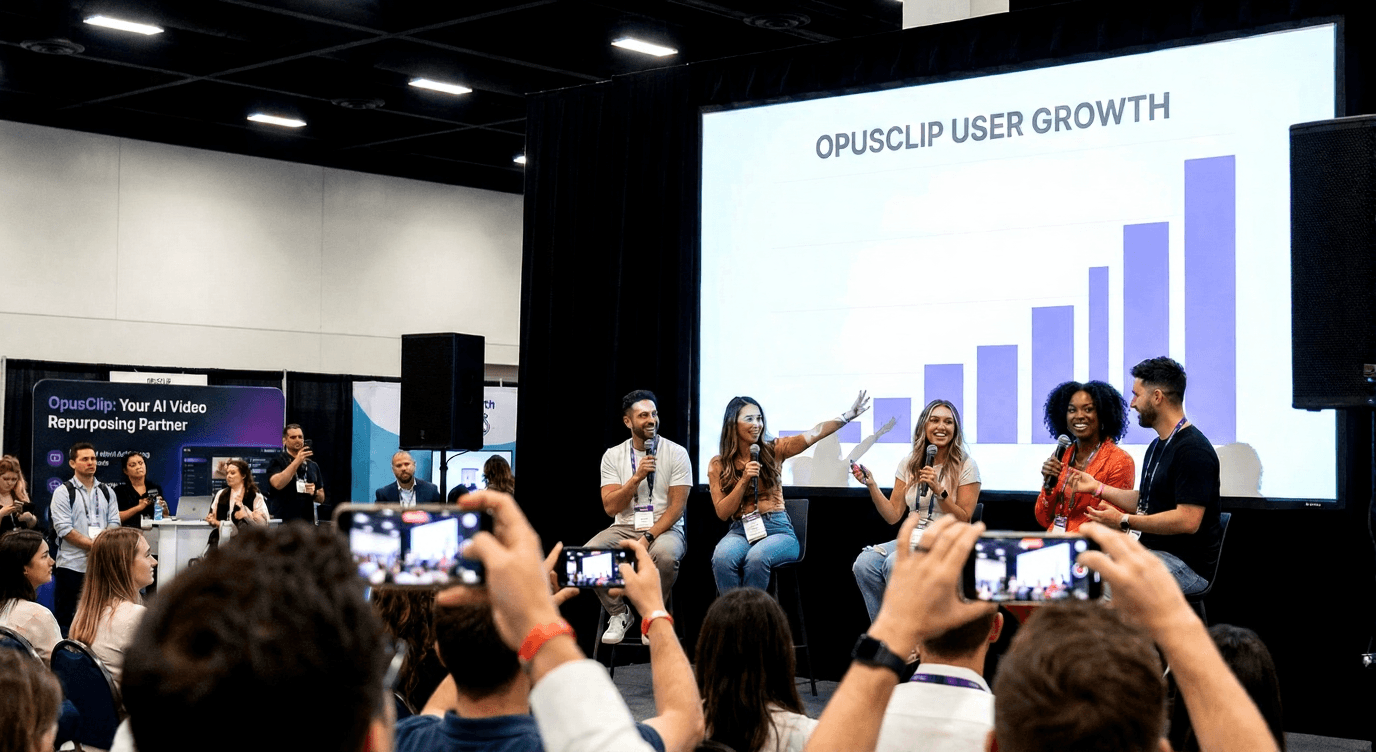
How OpusClip Turns Creators into a Compounding Growth Engine
In a landscape where every AI startup screams “viral,” OpusClip has been doing something more disciplined:
It built a creator ecosystem that actually performs.
Using OpusClip’s Top 100+ influencer dataset (YouTube, Instagram, TikTok) and cross-checking with competitor-style approaches, we break down how OpusClip engineers:
Higher view-efficiency vs raw follower count
A smart mix of nano, micro, and mid-tier creators
Multi-platform presence that maps to how real creators discover and adopt tools
If you’re building an AI product, creator tool, or B2B SaaS and still treating influencer marketing as one-off shoutouts, this is your operating manual.
Executive Summary
From the OpusClip Top 100 collaborators dataset:
YouTube + IG first. YouTube holds the largest share of partners; Instagram and TikTok reinforce discovery and proof.
94% are nano–mid tier. OpusClip intentionally avoids the “celebrity trap.”
Healthy efficiency. Median view-efficiency (views ÷ followers) meaningfully beats the typical “dead follower” profiles you see in inflated macro accounts.
Scalable design. The prospective list shows a clear path to layer in larger creators without abandoning performance discipline.
This is not a vibes-based strategy. It’s a portfolio.
1. Where OpusClip Shows Up: Platform Allocation
OpusClip’s platform mix is the first signal that this is built for real users, not just impressions.
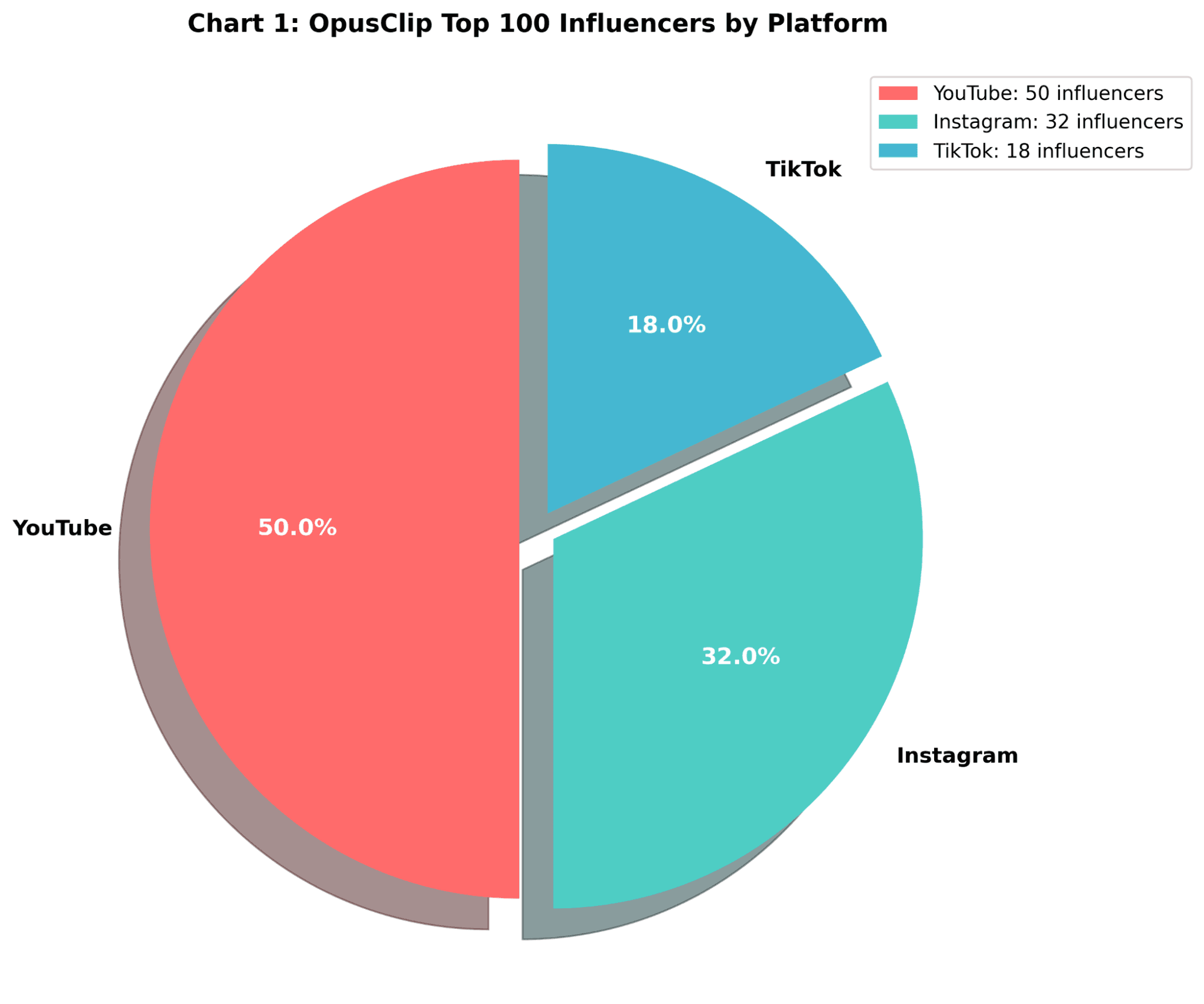
What this shows
YouTube is the anchor.
Instagram plays a strong supporting role.
TikTok is present but selective.
Why it works
YouTube is where deep-diving creators live:
Tutorial, workflow, and review content.
Ideal for showing OpusClip’s actual value: repurposing, hook detection, clip quality.
Instagram:
Social proof, reels, carousels, behind-the-scenes.
Great for repeated touchpoints and brand familiarity.
TikTok:
High-velocity experimentation.
OpusClip uses it as an acceleration layer, not the whole strategy.
If you’re copying this: don’t anchor entirely on TikTok just because it’s loud. Anchor where education and intent live; layer TikTok on top.
2. Who They Choose: The Anti-Vanity Tier Mix
Most tools chase macro and mega creators. OpusClip doesn’t.
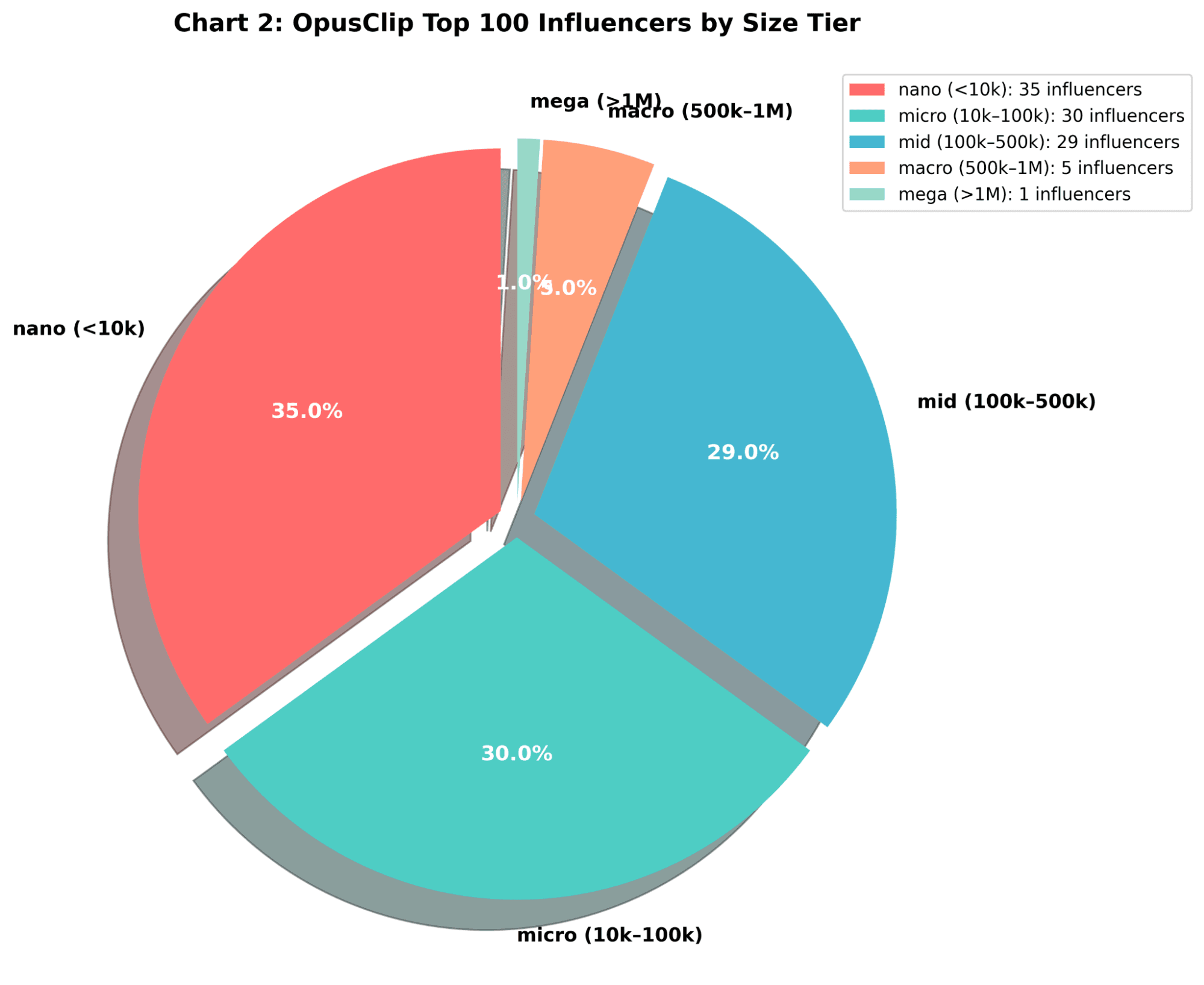
Chart 2 – OpusClip Top 100 Influencers by Size Tier
Patterns from the data
Majority = Nano / Micro / Mid-tier
Only a thin slice = Macro / Mega
This is deliberate.
Why this is powerful
Nano & Micro:
Closer to their audience.
Higher percentage of real engagement.
Audiences trust their tooling recommendations.
Lower price with higher ROI.
Mid-tier:
Scalable reach with less audience decay.
Still niche enough to feel credible.
Content angles and methodologies are already refined and ready to activate for commercial partnerships.
Macro/Mega:
Surgically applied, not as the foundation.Used surgically, not as the backbone.
Prevents budget drain on low-efficiency placements.
Remains essential for capturing share of voice and driving top-of-funnel awareness.
If you’re building your own list:
Optimize for proof-of-work creators (those who build, teach, edit, or even run agencies), not personalities who just occasionally mention “productivity” between lifestyle posts.
3. Where the ROI Lives: View-Efficiency by Platform
Reach is easy to buy. Efficiency is not.
So we look at view-efficiency:
View-Efficiency = Average Views per Video ÷ Followers
This tells you how alive a creator’s audience actually is.
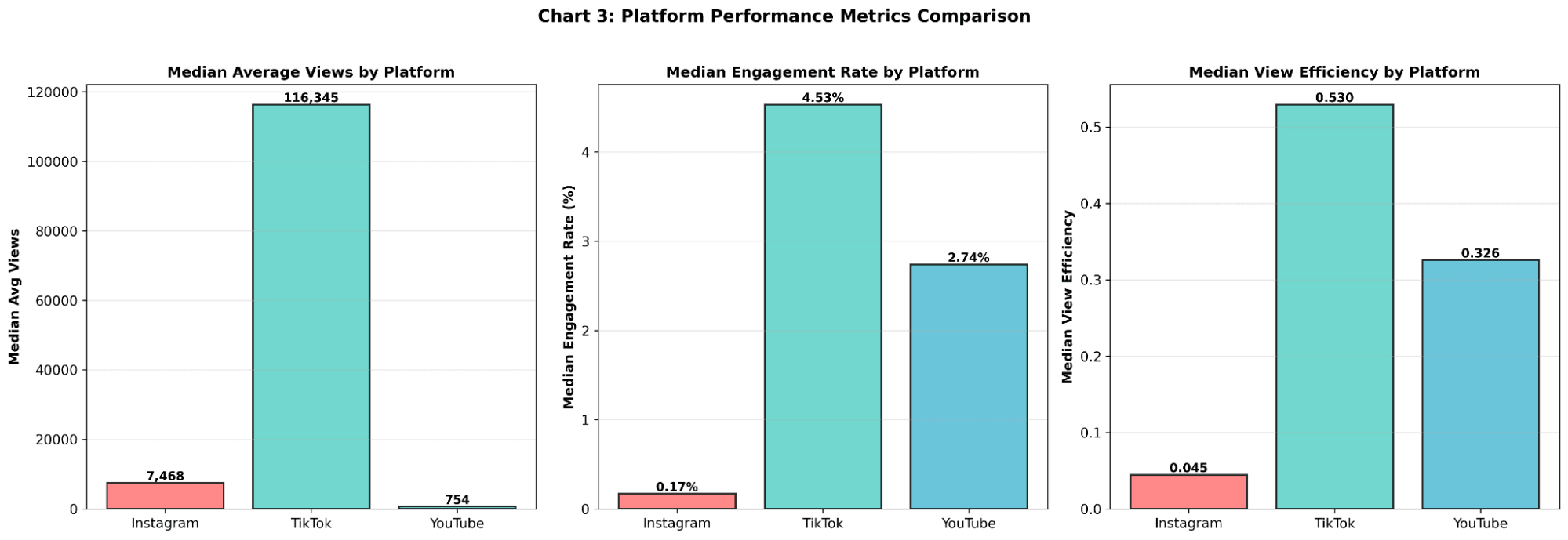
(Using OpusClip Top 100 collaborator data grouped by platform.)
Key readouts
YouTube shows strong, steady efficiency.
TikTok creators (though fewer) punch above their weight on views-per-follower.
Instagram is weaker in pure efficiency, but that’s fine — it carries social proof value and sits deeper in the funnel.
How to use this
Use TikTok for hooks and virality spikes.
Use YouTube for education and conversion.
Use Instagram as your “I keep seeing this tool everywhere” layer.
That’s exactly how OpusClip’s current creator map behaves.
4. OpusClip’s Creator DNA: Operator-Educators, Not Just Aesthetics
Across bios, content themes, and metrics, OpusClip’s collaborators skew heavily toward:
YouTube growth coaches
Content strategy and editing educators
AI / productivity / workflow creators
Agency owners and working video editors
This matters.
Instead of forcing random lifestyle audiences to care about an AI clipping tool, OpusClip taps creators whose followers:
Already care about views, retention, workflow, and monetization
Are actively searching for tools to save time and scale output
That’s why their median engagement and view-efficiency hold up even without huge follower counts.
Tactic to copy
Shortlist creators who:
Have multiple recent posts on:
“Content strategy”
“YouTube/tiktok growth”
“Editing pipeline”
“AI tools for creators”
Maintain consistent view-to-follower ratios (not just one lucky viral hit)
No relevance, no deal.
5. How OpusClip Quietly Outperforms “Big Name First” Strategies
When you contrast this with typical competitor patterns (e.g., InVideo-style heavier macro focus):
Competitors:
More macros, more “hero” creators.
High top-line reach, but mixed efficiency.
OpusClip:
Broader base of working creators.
Better aligned audiences.
Higher probability that each integration:
Educates
Demonstrates real workflows
Converts
Why this wins long-term
Cost Discipline
You pay less per integration.
You avoid subsidizing inflated, low-intent followings.
Compounding Trust
Viewers see OpusClip repeatedly across multiple credible, technical voices.
This builds a category association: “If you’re serious about content, you know OpusClip.”
Upgrade Path
The prospective list already includes larger creators who match the same DNA.
Scaling up doesn’t require changing the strategy — just extending it.
6. The OpusClip Playbook: How to Rebuild This for Your Brand
Here’s a concrete framework your readers can follow (this is where the content becomes truly useful).
Step 1 – Score Creators with Efficiency, Not Ego
For each creator:
Pull:
Followers
Avg views on last 15–30 relevant posts
Engagement rate
Compute:
- View-efficiency = avg views ÷ followers
Tag:
Platform
Niche (AI, editing, creator growth, SaaS, SMB, etc.)
Tier (nano/micro/mid/macro/mega)
Prioritize creators who are:
On-theme
Consistent
Overperforming for their size
This is exactly how your OpusClip sheet behaves under the hood.
Step 2 – Architect a Portfolio (Not a One-Off Campaign)
Use a mix like OpusClip’s:
50–70% nano/micro → tests + authenticity
20–30% mid-tier → scalable reach
<10% macro → strategic spikes only when metrics justify
Build this as a portfolio with:
Clear inputs (briefs, talking points, feature focus)
Clear outputs (signups, clicks, saves, comments, view-efficiency)
Step 3 – Define Platform-Native Content Templates
Borrow directly from what works in the OpusClip ecosystem:
YouTube
Tutorials: “My YouTube Shorts workflow with [tool]”
Comparisons: “[Tool] vs [Tool]: which one actually saves time?”
Case studies: “How I turned 1 podcast episode into a month of content.”
TikTok
15–30s demos:
Before/after clips
“Watch this AI find the hook for me”
Native formats:
- Duets, stitches, trends repurposed.
Reels:
- Quick “process reveal” clips.
Carousels:
“5 rules for clips that retain viewers”
Frame your tool as the enabler.
Don’t ask creators to reinvent your messaging. Give them a proven sandbox.
Step 4 – Double Down on Winners
After 30–60 days:
Rank creators by:
View-efficiency on your sponsored content
Saves/shares
Qualitative signals (“I signed up,” “I use this now,” “This fixed my workflow”)
Lock in:
- Long-term partnerships with the top 20–30%
Expand:
- Use their profiles as templates for who to recruit next.
This is how OpusClip’s current map can evolve into a durable, compounding influence network.
Conclusion: From Shoutouts to Systems
In the end, OpusClip’s story is straightforward: it wins because its influencer program is designed like a performance system, not a PR stunt.
Instead of overpaying macros and praying for reach, it leans on working creators whose audiences care about workflows, growth, and tools. Instead of chasing hype platforms, it assigns roles across YouTube, TikTok, and Instagram with intent. Instead of guessing, it measures: view-efficiency, relevance, audience fit, long-term impact. That is why the numbers hold up—and why this model is transferable.
If you’re serious about growth in 2025 and beyond, this is the new baseline. Treat your influencer strategy as a portfolio: score creators, prioritize nano/micro/mid operators, map content to the funnel, and double down only where the data justifies it. Use the scoring template, run your own list through this lens, and be prepared for uncomfortable truths: some of the biggest names in your roster may be your worst investments.
The upside is clear: once you cut the dead weight and back the right creators, your influencer motion stops being a cost center and starts behaving like a compounding asset. That’s the real lesson from OpusClip—don’t just look influential. Build an engine that is.